In the process of food production and packaging, due to air pollution to the food, the phenomenon and problem of the total number of bacterial colonies exceeding the standard are caused, and this phenomenon and problem often occur in food production enterprises. Under the trend of stricter food safety supervision, more and more food companies have begun to pay attention to the air quality in the workshop. Only by strictly sterilizing the air in the food production workshop can the microbial content in the air in the workshop be effectively controlled.

Below we introduce the air disinfection methods commonly used in food production and packaging workshops
According to the principle of sterilization, air disinfection can be divided into two types: physical disinfection and chemical disinfection. Physical methods include ultraviolet lamp irradiation, electrostatic adsorption, and air filtration. Chemical disinfection mainly includes fumigation with disinfectants, such as peracetic acid fumigation or spraying, or ultra-low volume spray disinfection with peracetic acid, and disinfection with chemical factors produced by some disinfection instruments, such as ozone for air disinfection.
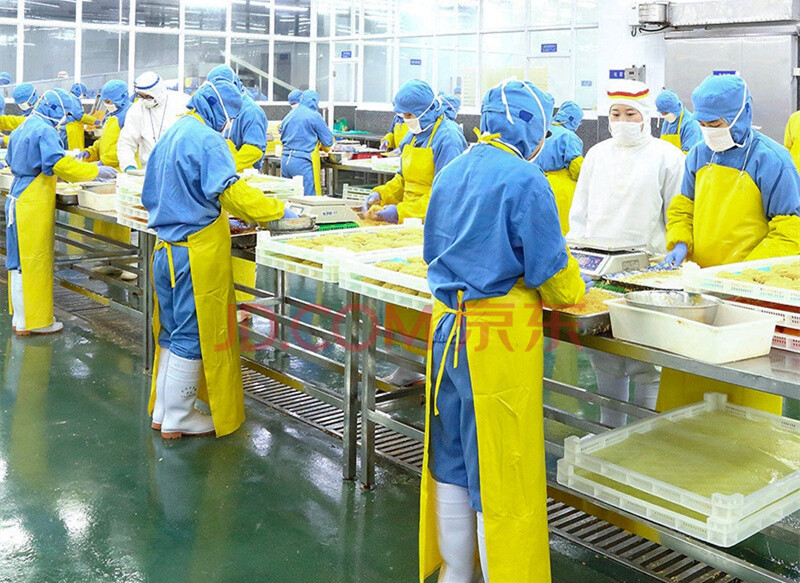
(1) Air filtration method
Air filtration is the use of physical retention to remove dust and microorganisms from air media. The filtration mechanism is mainly that microorganisms (dust, water droplets) in the air directly collide with the filter fiber (filter material) with the airflow, or adhere to the fiber (filter material) due to gravity sedimentation, or due to static electricity. Action (fiber with static electricity) particles in the air are adsorbed on the filter material. When the air passes through, the microorganisms are trapped on the side of the medium to achieve the desired sterilization effect.
In food manufacturing, especially the packaging process, when aseptic (purified) packaging should be performed, a purified environment (purification room) is required, and the purification effect of the purification device on the air is very obvious. This kind of clean room is to purify the filtered air into a specific environment, and the food after heat sterilization enters the environment for cooling and packaging. The food packaging purification environment here is equivalent to the ultra-clean workbench in the laboratory, which can achieve aseptic packaging.
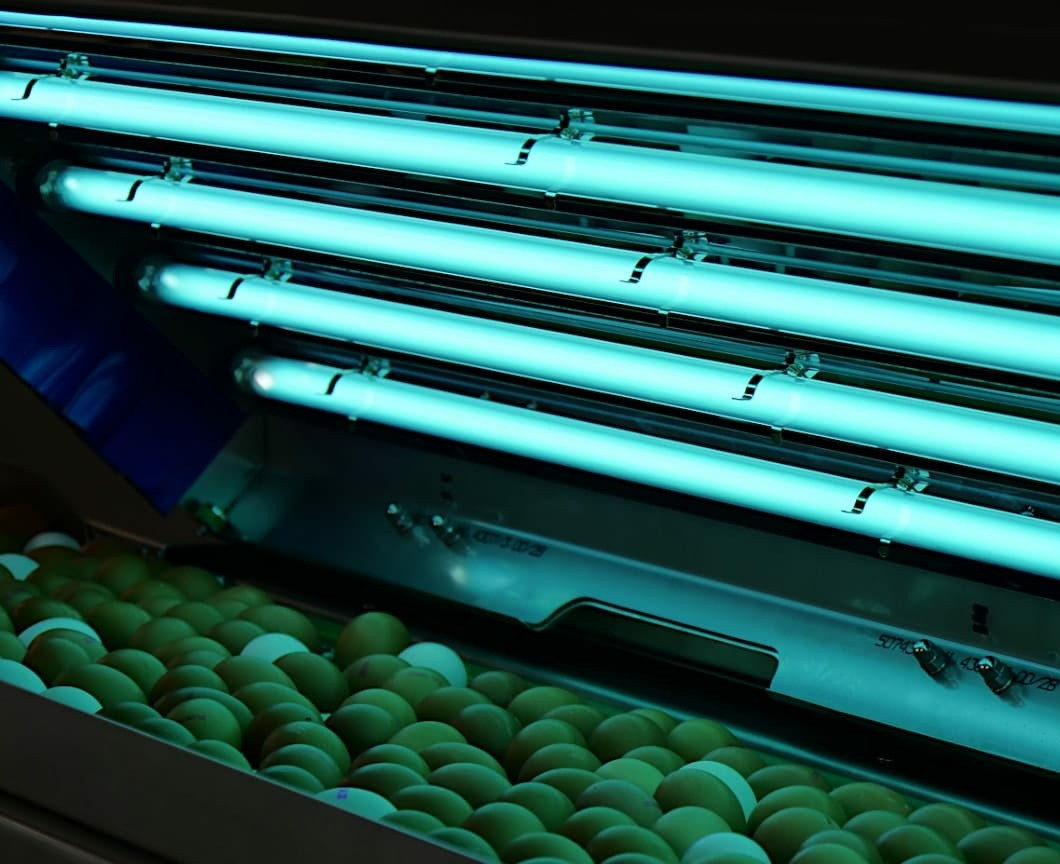
Ultraviolet disinfection means that ultraviolet rays act on the DNA of microbial cells, destroying the molecular bonds of DNA, making them lose their ability to replicate or lose their activity, and then lead to the death of microorganisms.
Ultraviolet (UV) disinfection is an efficient, safe, environmentally friendly and economical technology with a broad-spectrum bactericidal effect that can kill a variety of microorganisms including bacteria, Mycobacterium tuberculosis, spores and fungi, and hardly produces any disinfection side effects. product. In principle, all food production and processing places can install ultraviolet germicidal lamps for air disinfection.
The dose required to kill microorganisms by UV light depends on the intensity of the UV light and the exposure time. In addition, the sterilization effect of ultraviolet rays is affected by temperature (suitable for 20-40 degrees Celsius), humidity (60%) below, suspended solids, organic matter, etc. However, excessive sunlight ultraviolet radiation can cause damage to the human skin, eyes and immune system.
The disinfection of air by ultraviolet rays is mostly fixed irradiation method. Ultraviolet sterilization is a static disinfection method. When the ultraviolet lamp is turned on, all personnel should leave the disinfection site to avoid personal injury; it is recommended to install the control switch of the ultraviolet disinfection machine outdoors, and turn it on after all personnel go out, and turn it off otherwise. For places where there are people, it is not suitable to have exposed irradiation, but through irradiation can be used, that is, a UV sterilization fan is provided. This device relies on a fan to make the air pass through the ultraviolet fan to sterilize the air. When sterilizing indoor local air, such as the division, filling, packaging, canning, etc. of various foods, the indoor air can be operated, and the cold (cool) rooms of restaurants and restaurants can be used for glass, plastic and other building materials. It is closed and a germicidal UV lamp is installed in between.
Fumigation is the use of sterilizing drug gas or smoke to fumigate in a confined space to achieve the purpose of disinfection. The method can be used to treat both indoor air (contaminated air) and contaminated surfaces. Food production and operation sites should regularly implement fumigation and disinfection to ensure the cleanliness of production sites and air.
(1) Formaldehyde fumigation (40% formaldehyde aqueous solution is called formalin).
Formaldehyde gas has broad-spectrum, high-efficiency bactericidal effects and is simple and convenient to use. However, formaldehyde is a toxic gas, which is toxic and carcinogenic. Food production workshops should not use this method. (2) Peracetic acid fumigation. Similar to formaldehyde, peracetic acid is also a high-efficiency broad-spectrum bactericide. It is a colorless and transparent liquid with a pungent sour taste, volatile and highly corrosive, and is irritating to human mucous membranes. It is also not recommended.
Ozone has good diffusivity, and ozone disinfection has the advantages of long duration of disinfection effect and no residue and no dead ends. Ozone is a broad-spectrum bactericide that can kill bacterial propagules and spores, viruses, fungi, etc., and can destroy botulinum toxin. The sterilization principle of ozone mainly relies on strong oxidation, which inactivates the enzyme and causes the death of microorganisms.
Ozone sterilization is greatly affected by temperature, humidity and concentration. The specific disinfection time can be determined according to the size of the workshop and the cleanliness requirements. Although ozone disinfection has its own advantages, it is difficult to effectively remove microorganisms on the surface of objects. Ozone is a strong oxidant, which can damage various items. The higher the concentration, the heavier the damage to the items, and the stimulating effect on the human body. Ozone disinfection must be carried out in an unmanned environment, and entry is allowed at least 30 minutes after disinfection.
It should be noted that ozone has a killing effect on the contaminated microorganisms on the surface, but the effect is slow, generally requiring 60 mg/m3, relative humidity ≥ 70%, and 60-120 minutes to achieve the disinfection effect. When ozone is used for water disinfection, 0°C is the best. The higher the temperature, the more conducive to the decomposition of ozone, so the sterilization effect is worse; humidification is conducive to the sterilization effect of ozone, and requires humidity > 60%. The higher the humidity, the better the sterilization effect. .
Food dynamic sterilizer is a sterilization method that has been recognized by food companies in recent years. It uses bipolar plasma electrostatic field to decompose and break bacteria, polarizes and adsorbs dust, and then combines drug-impregnated activated carbon, electrostatic net, The photocatalyst catalytic device and other components are subjected to secondary sterilization and filtration, and the treated clean air circulates rapidly in large quantities, so that the environment of the food workshop is kept in a relatively "sterile and dust-free" state. When sterilizing the workshop, people can work in the workshop at the same time, so this kind of sterilizer is called "food dynamic sterilizer".
The device can simultaneously sterilize the air in the space while the worker is working, without any harm to the human body. When the semi-finished food that is basically sterile after high temperature is transferred to the links of cooling, selection, packaging and filling, it can effectively reduce or avoid the microorganisms contained in the air from attaching to the surface of the food and re-contaminate the food, effectively improving the workshop air and food. Hygiene quality. The food dynamic sterilizer belongs to dynamic sterilization and can only be used for air sterilization. It has no killing effect on the surface microorganisms of objects, nor can it be used for water sterilization. It is suitable for cooling workshop, inner packaging workshop and filling workshop, which can effectively kill bacteria, purify the air, and avoid secondary contamination of food by bacteria in the air.
Principles, selections and recommendations for air disinfection methods in food production workshops:
The general principle is to ensure food safety in all production links, as well as personnel safety in the environment.
Food safety is a systematic project. It is not a certain type or one type of disinfection equipment that can completely guarantee food safety, but requires a reasonable combination of various disinfection equipment, because there is no omnipotent and omnipotent air disinfection equipment. Therefore, whether physical or chemical methods are used, food production workshops should scientifically and impartially analyze and evaluate their pros and cons under the premise of ensuring the safety of personnel, and choose one or two of them to control the microbial content in the workshop. The following methods can be used:
(2) Workers use static disinfection equipment after get off work at night. For example, ultraviolet sterilization is used to sterilize the air in the packaging, cooling and filling links, so as to prevent the accumulation of bacteria in the air and cause harm to the product during the day. For ingredients, semi-finished product workshops and finished product warehouses, it is recommended to use ozone to sterilize the air. It can not only inhibit the growth of bacteria in the air, but also the smell of ozone can effectively drive away rodents and insects, and effectively reduce the harm of organisms to food. It should be noted that both ozone and ultraviolet rays are harmful to the human body. It needs to be turned on after workers leave work and turned off before going to work, and then workers can enter the workshop after opening the windows for ventilation.
While producing and providing advanced, safe and reliable food machinery, Efu Machinery also pays attention to the production safety and safe production of equipment operators. Only when all food production enterprises pay attention to food safety and personnel safety can we human beings live a healthier and better life.